Whatsoever thy hand findeth to do, do it with thy might
The Caine Mutiny Court-MartialWhatsoever thy hand findeth to do, do it with thy might is the verse from Ecclesiastes 9:10 that Dr. Keith sends to Willie Keith as a final message. In the scene, it is at once a biblical injunction, a father’s personal counsel, and a prompt that Willie connects to his work aboard the USS Caine. Its significance lies in the passage from written advice to action: Willie receives the verse in grief, then declines an admiral’s reception, saying that he has duty.
The Verse as a Final Message
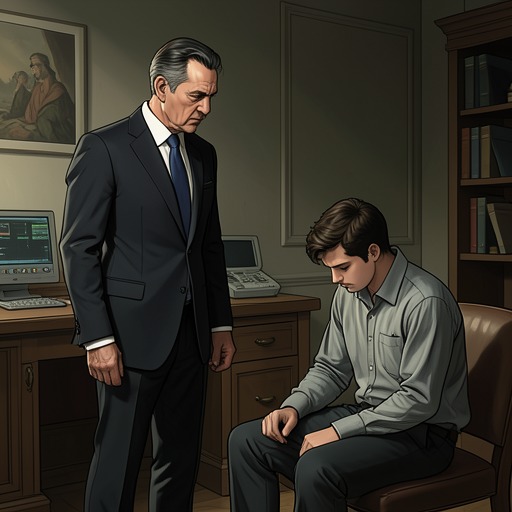
The verse reaches Willie inside a black-bound Bible his father has sent from the hospital. The package is battered, and a wrinkled note protrudes from it; seeing his father’s handwriting shocks Willie. In the note, Dr. Keith explains that he found the Bible in the hospital bookstore, mentions that the operation is scheduled for the next day, and admits that he is accepting the surgeon’s optimism despite his doubts. He directs his son to Ecclesiastes 9:10 and says, “I’ll let that stand as my last word to you.” The verse is therefore not detached religious instruction: Dr. Keith explicitly makes it his parting counsel to Willie.
The biblical line gives the message its stark measure of urgency: “Whatsoever thy hand findeth to do, do it with thy might; for there is no work, nor device, nor knowledge, nor wisdom, in the grave, whither thou goest.” Its command to exert oneself is joined to the reminder that life and opportunity are finite. That combination matters in this scene because the advice arrives while Dr. Keith faces an operation and contemplates the possibility that he may not speak to his son again. The passage does not promise Willie success or remove the father’s uncertainty; instead, it identifies the manner in which he should undertake whatever work lies before him.
A Personal Interpretation
The verse is underlined in wavering ink, and Dr. Keith has added a note in the broad margin: “He’s talking about your job on the Caine, Willie. Good luck.” The annotation makes the father’s meaning deliberately concrete. Rather than leave the biblical injunction at the level of general doctrine, he applies it to the naval assignment that awaits his son. The uneven marks of the underline and the cramped handwriting also keep the advice tied to its circumstances: this is a message written from a hospital bed, in the interval before surgery, and addressed personally to Willie.
The margin note does not explain what particular tasks Willie will face or how he should resolve future conflicts. Its force is more fundamental: whatever the job requires, it should be met with full effort. That leaves the verse broad enough to apply across the duties ahead while making the Caine the immediate setting in which Willie is to understand it. The Bible, its marked passage, and the handwritten gloss form a compact chain of transmission—from scripture, through a father’s interpretation, to a son about to enter shipboard service.
From Reading to Conduct
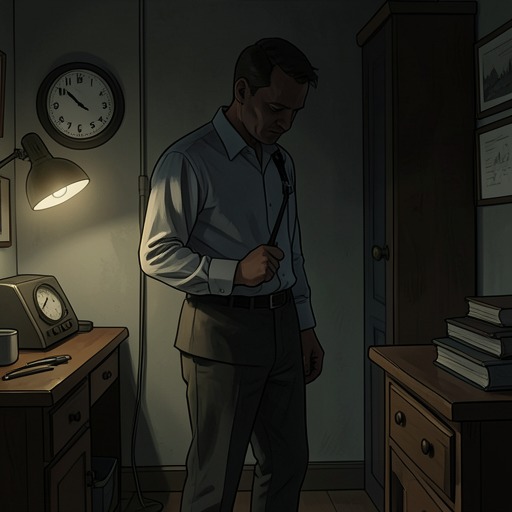
Willie turns to the passage with shaking hands. Afterward, he switches off the light, throws himself onto his bunk, and buries his face in the pillow, remaining still for a long while. His response registers the emotional weight of the message without turning the verse into an instant consolation: he has received his father’s counsel at a moment of shock and grief, and the scene allows that grief to remain visible.
When the admiral’s marine orderly comes to the shack to say that a barge is waiting at the gangway, Willie asks him to tell the admiral that he cannot attend that night because he has duty. The refusal gives the verse an immediate practical echo. Willie does not quote it or explain his decision through religion; instead, he acts in a way that places duty ahead of the reception. His choice follows the father’s explicit association between the verse and the Caine assignment, though the scene does not claim that the verse alone causes it. The next morning, Lieutenant Commander Philip Francis Queeg reports aboard the ship, carrying the narrative from the father’s private charge toward the command life in which Willie’s work will unfold.
Meaning and Limits
The expression holds together two scales of meaning. Its biblical wording speaks generally of using one’s strength while one is alive; Dr. Keith’s marginal note narrows that injunction to Willie’s particular naval job. The movement between them is the passage’s central literary function: an inherited text becomes intimate counsel, and intimate counsel acquires a concrete destination aboard the Caine.
The scene also places the advice beside an unresolved future. Dr. Keith can offer his son a standard for action, but he cannot describe the trials Willie will encounter or guarantee their outcome. Willie, for his part, receives the words in a moment of sorrow and then makes one immediate choice consistent with their emphasis on duty. The verse thus serves neither as a complete program for his career nor as a promise that effort will prevent loss. It is a last instruction about how to meet the work at hand, given to a son just before that work begins.